


Commercial HVAC systems are everywhere, quietly running in the background of every office building, hospital, school and shopping center you walk into. But behind those ceiling vents and rooftop units lies a world of engineering and innovation that is genuinely worth learning more about.
Commercial Systems Are Different From Residential Ones
It would be easy to assume that commercial HVAC systems are just larger versions of the one you have at home, but the differences go well beyond size. Commercial systems are modular, meaning components can be added or reconfigured as a building’s needs change. They’re designed to handle different occupancy levels, air quality demands and zoning requirements than anything a residential system could handle. A single commercial unit can manage airflow across hundreds of thousands of square feet with precision that a home system simply isn’t built for.
They Play a Critical Role in Indoor Air Quality
In commercial settings, HVAC systems do far more than just heating and cooling. They also control humidity, filter contaminants and regulate ventilation rates to meet strict indoor air quality standards. In environments like hospitals and laboratories, this function is just as important as temperature control. Specialized filtration systems in these settings can remove airborne particles at a microscopic level, making the commercial HVAC systems an important part of indoor air quality.
Rooftop Units Are the Industry Standard for a Reason
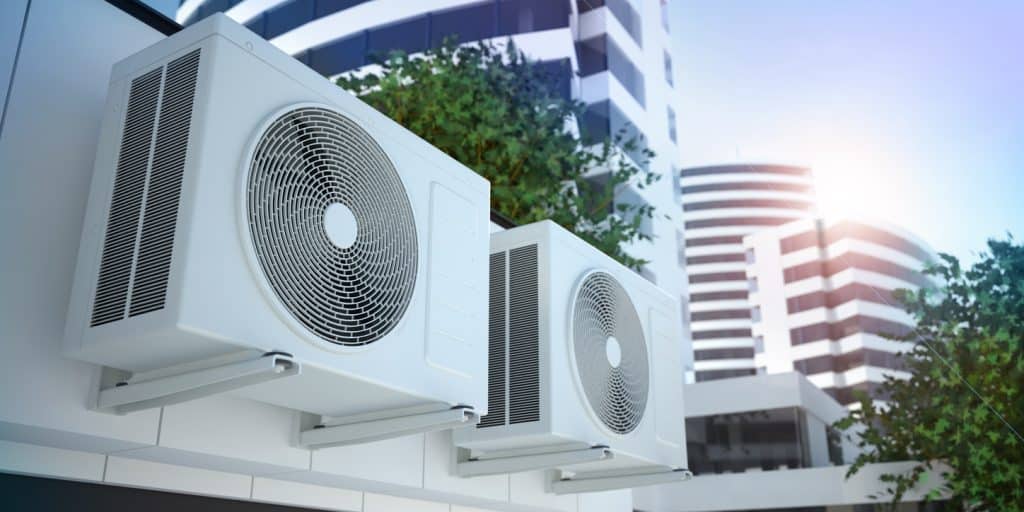
The vast majority of commercial buildings use rooftop units. Placing equipment on the roof keeps mechanical systems out of usable interior space, reduces noise for occupants and makes maintenance access easier. Rooftop units also allow for easier expansion and replacement without disrupting the building’s interior operations, which is a significant advantage in busy commercial environments.
Energy Consumption Numbers Are Staggering
Commercial HVAC systems account for roughly 40 percent of total energy consumption in commercial buildings, making them the single largest energy user in most facilities. This is why energy efficiency has become such a central focus in commercial HVAC design and upgrades. Modern systems use variable speed drives, smart controls and advanced refrigerants to reduce energy use compared to equipment from even 10 years ago.
Smart Technology and System Management
Building automation systems now allow facility managers to monitor and adjust HVAC performance in real time from virtually anywhere. Sensors track occupancy, outdoor conditions and air quality to make continuous adjustments that keep the system running at peak performance levels. Predictive maintenance technology can even flag potential equipment failures before they happen, reducing downtime and repair costs.
Commercial HVAC is one of those fields where the more you learn, the more impressive the engineering becomes. These systems keep millions of people comfortable every day, and the technology behind them continues to advance in ways that make buildings smarter, healthier and more efficient. For anyone responsible for managing a commercial property, staying informed and working with qualified HVAC professionals is the foundation of keeping those systems performing at their best. When you need commercial HVAC services in North Salt Lake, UT, contact Alta Air.